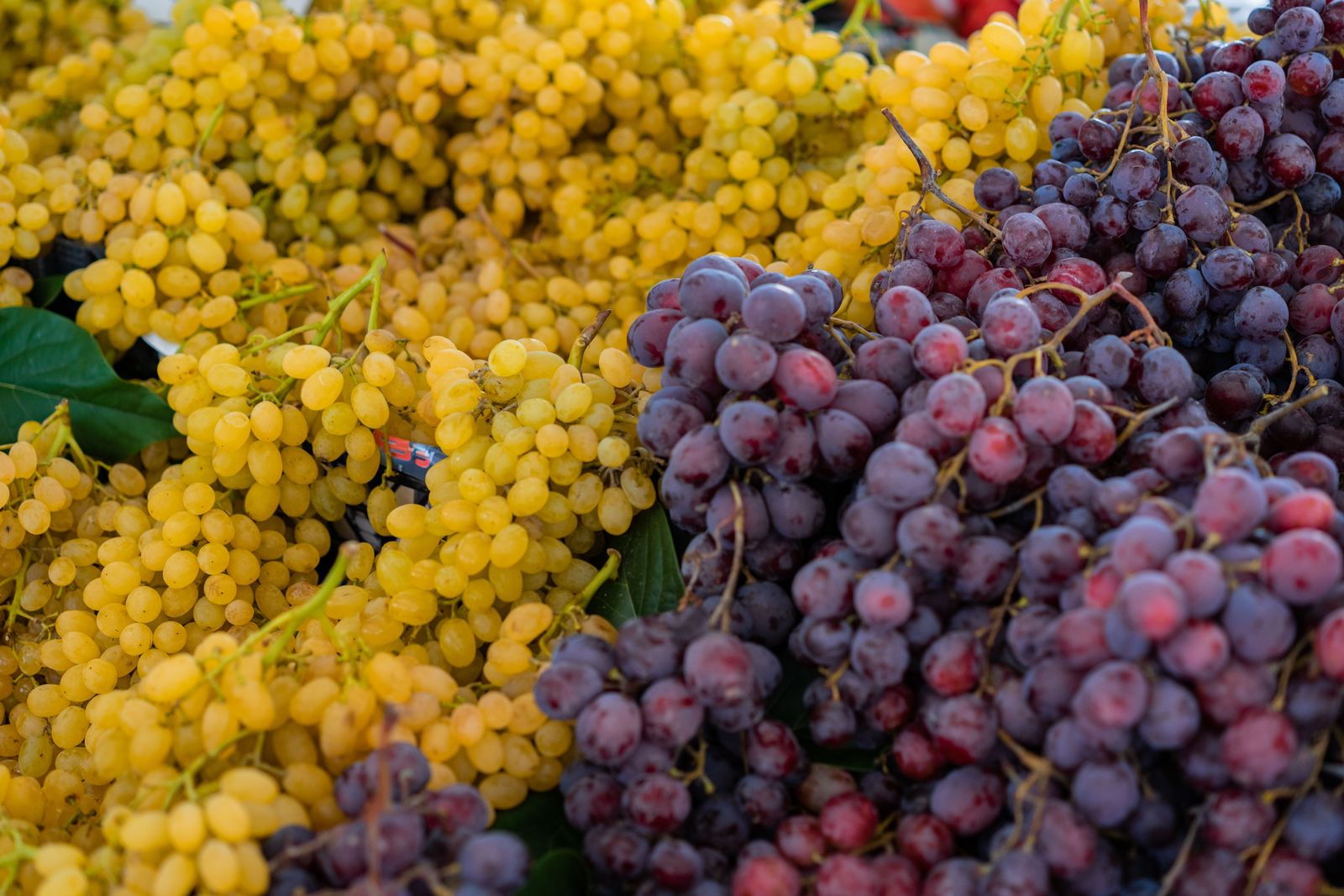
Taste enough wine and certain grapes start working like a compass. Pour a glass blind and the right variety can place you on a map faster than a label ever could. Here are five that do that job especially well.
Whites that name their landscape
Assyrtiko grows on Santorini in vineyards trained low into basket-shaped coils to survive the island's relentless wind. The volcanic soil gives it a bone-dry, almost saline edge, with citrus and a flint-like minerality that no other Greek region quite reproduces. One sip of high-acid Assyrtiko, with its whiff of sea spray, puts you on a caldera in the middle of the Aegean.
Grüner Veltliner is Austria's calling card, a white grape that ranges from light and easy-drinking to dense and age-worthy along the terraces of the Wachau and Kamptal. It carries a signature note of white pepper alongside green apple and lentil, a savory streak that separates it from every other crisp white in Europe. Order it in Vienna and you're tasting the country's most-planted grape in its only real home.
A grape that changes with the harvest, and one that stains
Furmint is the backbone of Tokaj in Hungary, and it's unusual for doing double duty. The same grape makes bone-dry, high-acid table wine and the botrytis-affected sweet wine called Tokaji aszú, depending on how late the grapes hang and how much noble rot sets in. Dry Furmint tastes of green apple and wet stone; aszú turns thick, amber and honeyed. Either way, the grape stays inseparable from that one Hungarian valley.
Saperavi is one of the few teinturier grapes, meaning the flesh itself is dark, not just the skin, so the wine comes out deeply colored even after a brief fermentation. In Georgia it is traditionally fermented and aged in qvevri, buried clay vessels, which gives it a tannic, earthy, faintly smoky character alongside dark plum fruit. It may be the grape most tied to a single winemaking method anywhere on Earth.
Malbec started out in southwest France, but it found its real home in Mendoza, Argentina, where high-altitude vineyards between 900 and 1,500 meters give it thick skins, deep color and a velvety texture French Malbec rarely reaches. Altitude cools the nights enough to preserve acidity while intense daytime sun ripens the fruit fully, producing the plush, dark-fruited style that made Malbec Argentina's signature export.