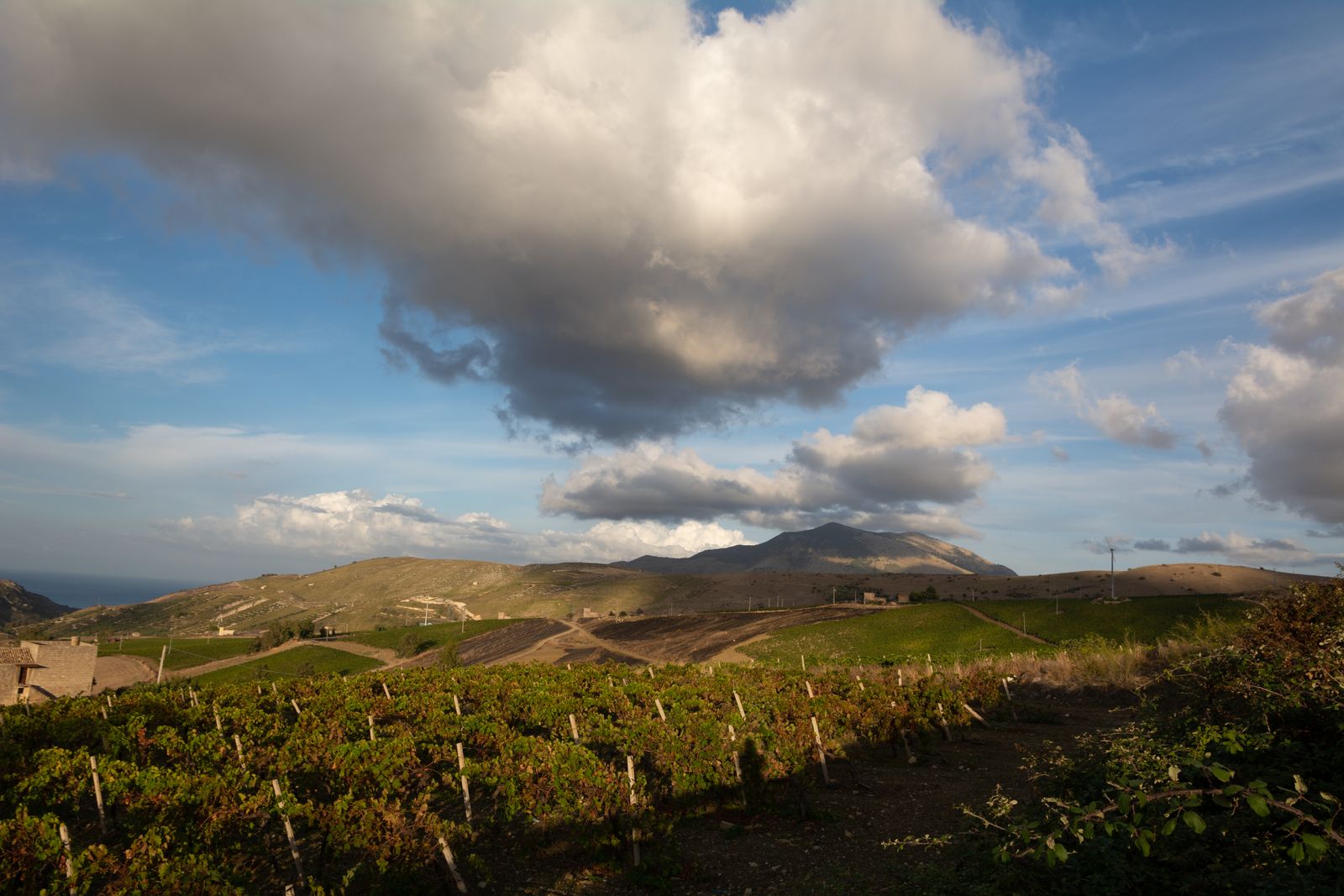
The soil on Santorini is black and grey, made of pumice and ash from an eruption around 3,600 years ago that blew apart the island's original shape and left behind the caldera that draws visitors today. Almost nothing else grows easily in it. Grapevines do, and they have for thousands of years, in some of the oldest, most unusual vineyards in the Mediterranean.
Santo Wines is the cooperative that ties much of that history together. Founded by a group of local growers in the late 1940s, it now represents hundreds of small family plots scattered across the island, most too small and too rocky to farm any other way than by hand. There is no irrigation to speak of. Santorini gets little rain, and the vines survive on morning humidity carried in from the sea and trapped close to the ground. Harvest here still happens mostly by hand, since the low, coiled vines and the loose volcanic soil make machines impractical on most plots.
That survival trick shapes how the vines look. Rather than trained upright on wires, Santorini's vines are coiled into low, round baskets called kouloura, woven from their own branches and kept close to the volcanic sand. The shape blocks the island's strong winds and gives the grapes some shade, while the basket's inner nest holds moisture the plant needs to get through summer. Because volcanic sand kept phylloxera from ever taking hold here, many vines still grow on their own roots rather than grafted rootstock, some reportedly over a century old.
Assyrtiko and the view
The grape most associated with the island is Assyrtiko, a white variety that turns out crisp, dry, strongly mineral wines even in the summer heat, thanks to acidity the vines hold onto despite the sun. Santo Wines' visitor terrace sits above the caldera near Pyrgos, tables facing out over the water toward the volcanic islets in the middle of the bay, a popular spot to taste Assyrtiko as the sun goes down. Other local grapes, like Athiri and the red Mavrotragano, show up on the tasting list too, giving visitors a fuller picture of what this volcanic soil can produce beyond its best known white.
Santo Wines is one of more than 46,000 wineries mapped so far on World Winery Map.